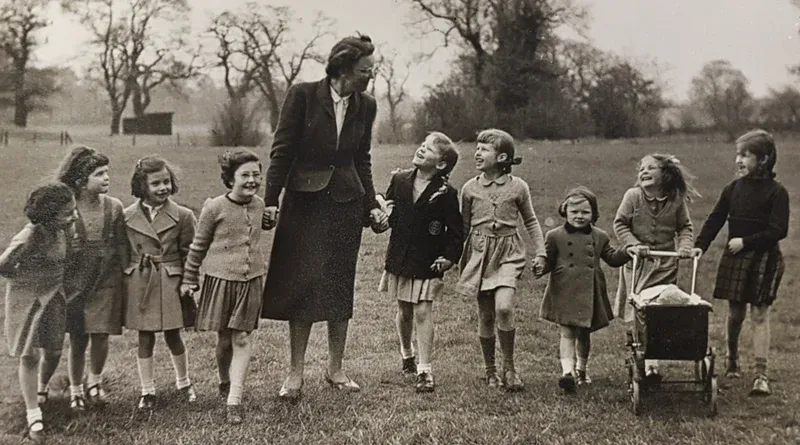
The Great Evacuation - Ibstock Place During the Second World War
Hardy Samuels, LVI, reflects on Ibstock Place School’s wartime evacuation, exploring how pupils and staff adapted to life away from London during the Second World War.
Hardy Samuels
LVI
At the outbreak of the Second World War, on September 1st 1939, the British government launched
Operation Pied Piper
in response to Nazi Germany’s invasion of Poland. Operation Pied Piper was the evacuation of vulnerable citizens (mostly school children, hence it being named after the well-known fairytale) from urban areas into more secure rural locations.
This large-scale evacuation saw more than 1.5 million people evacuated from vulnerable locations in the first four days of the operation being launched. with it being estimated that a total up to 3.75 million civilians being evacuated in the initial and subsequent waves.
Among all this. Ibstock Place School and its pupils were evacuated away from London.
Urban areas and cities were evacuated as they were densely populated. home to factories. docks, military infrastructure and more meaning that they would become a target for subsequent Luftwaffe bombing raids, of which the government anticipated. In 1941, a series of bombing raids, named ‘The Blitz’, begun in 1941 London especially endured 57 consecutive nights of relentless bombing. hence the prediction of this and deployment of operation Pied Piper prevented hundreds of thousands of civilian casualties.
For Ibstock Place School, located in South-West London, the outbreak of war posed a major threat as London was one of the foremost targets for Nazi Germany to eventually capture.
During this time, Ibstock was led by headmistress Miss Barbara Preistman (whom the kindergarten Preistman House’ building is named after), who saw the outbreak of war as a serious concern. As early as November 1939, correspondence was already being exchanged regarding a potential evacuation from the current position of the school in Kensington.
Below, is a letter written by Barbara Preistman regarding the potential evacuation. Following this letter, Ibstock Place School and all of its pupils relocated from Kensington to the small village of Little Gaddesden, located just North-East of London in Hertfordshire. The school moved into Dennison House, and by necessity, Ibstock Place now became a boarding school. In the following period of time of which the school was relocated away from London, children continued their lessons and studies as usual, while teachers tried their best to ensure that life went on ‘as normal’ for all.
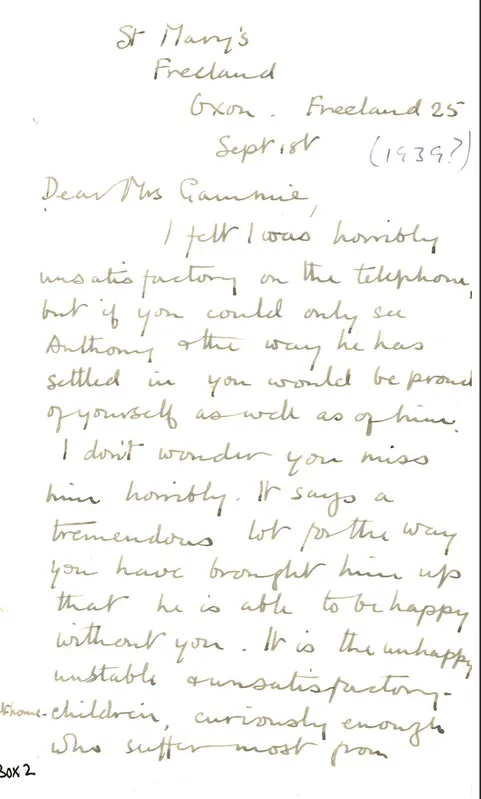
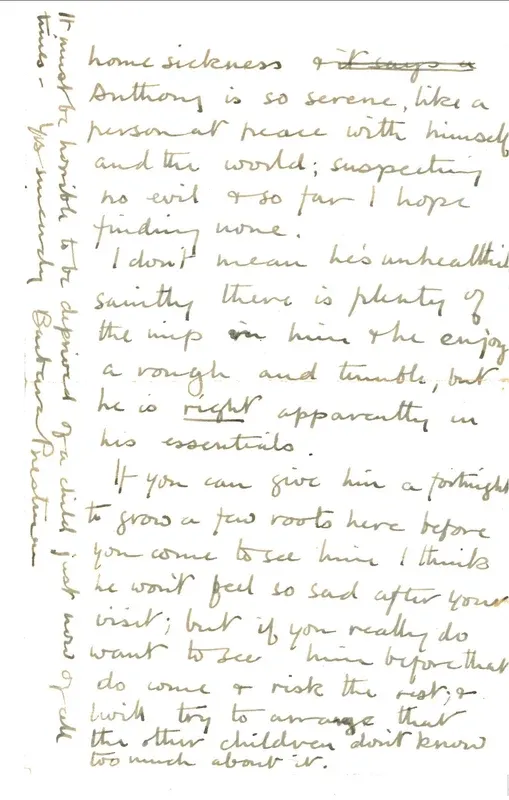
However, this relocation marked a vast change in lifestyle for many of the children, since they were not used to the boarding-nature of the school, and being away from family caused many to experience home sickness.
Parents were often encouraged to avoid visiting their children due to the fear that this may amplify the homesickness experienced by many, however, letters were frequently exchanged (across the page is an example of a letter to a parent who misses their child).
Despite much hardship endured by students during the war, former boarders revisited Little Gaddesden and the school they spent so much time in during this period, in 1971. They looked back upon the “happy times” that they spent here, visiting many familiar places like the tiny music and kindergarten cottages, the surrounding park, trees of which they used to climb that were still standing, and many other landmarks that they could still recognise many years on from their occupancy.
Today. it is important to remember the events that occurred during the wars, and the history of Ibstock Place throughout this.
Many former Ibstock students and staff were heavily impacted throughout this time, whether this be the students and teachers who were evacuated to Hertfordshire, the earlier students who ended up fighting in World War 11, and those who unfortunately passed away during this time.
Ibstock Place still stands today, and remembers its important history from this period.
All photographs were taken from the Ibstock Archives - to see more, visit ipsarchives.weebly.com